Team Building Activities – Love ‘em or Hate ‘em?
I can’t say that I’ve ever actually enjoyed team building days. For me they were unnecessary time away from doing my work. I already had formed opinions about my co-workers, superiors and subordinates. Very little was actually going to change my opinions or bring us closer – and being a military environment, I was never really sure what they were going to achieve. For me, going on exercise or deployment with others, spending 24/7 with them was enough team building I could take in one lifetime.

Having said that, practising our skills as a team was absolutely valuable to see where strengths and weaknesses lay, so that we could accommodate each other. Doing a high ropes course over the pool or going hiking/abseiling/orienteering?
Just showed up those who were athletically talented and those who weren’t. Or in my experience, who couldn’t navigate their way out of a paper bag or were frightened of water while all the time I was thinking about the amount of work piling up and how long I was going to have to work out of hours to get it done.
And then we went back to work, nothing changed except I’d now seen a few of the people frightened and pushing through their fears. Call me tough, but that’s exactly how I expected they would perform – they were in the military after all…
Earlier this week, I was reading an article by Claire Sutherland supporting cynicism in relation to team building days and activities, seen as an exercise in endurance of the participants rather than the intended building of a team.
Why is that?
If you’ve ever planned a team building activity or day, I apologise if this upsets you, but your efforts are in vain if the workplace stays the same. Taking a disjointed, non-functioning team away from the workplace may be some fun but it will not fix workplace problems, particularly when used as a stand-along solution.
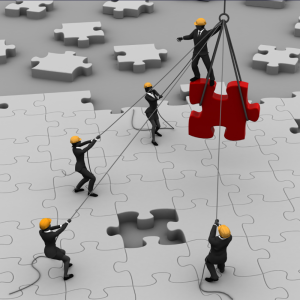
Don’t get me wrong. The right activity with the right focus leads to better understanding of each other and how things can change for the better in the workplace. The activity itself as well as the learnings from the activity must be relevant to the workplace and transfer into the workplace. Used as one of a suite of measures, it can work.
I mentioned above that positive team building for me was an experience where we practised our skills. We would form resuscitation teams and practice our roles in a specially designed skills development centre. The centre was fitted out with high fidelity mannequins, part-task trainers and equipment that would respond to our interventions.
Scenarios were run that tested our skills and our knowledge, identifying where we had gaps. As a team, we would discuss how to fill those gaps and how to build on the strengths in the team. No judgement of each other. They were learning opportunities – acceptance of where we were at individually and how we could be better and focus on the outcome. The joint mission of saving lives.
We took the learnings back to the workplace and helped each other to get better with supervised opportunities to practise any skills that needed more development, helping each other to gain further knowledge and even better the confidence in each other of life saving skills.
Team building takes some thought. It takes an understanding of the workplace, the personalities, their strengths, their situations – so many pre-activity considerations. And then, planning the activity so that the ‘team’ get the insights they need to take back to the workplace along with the ability to implement the learnings and change.
Anyone for paintball?
If you’re interested in reading the article that prompted my newsletter, you can find it at: